
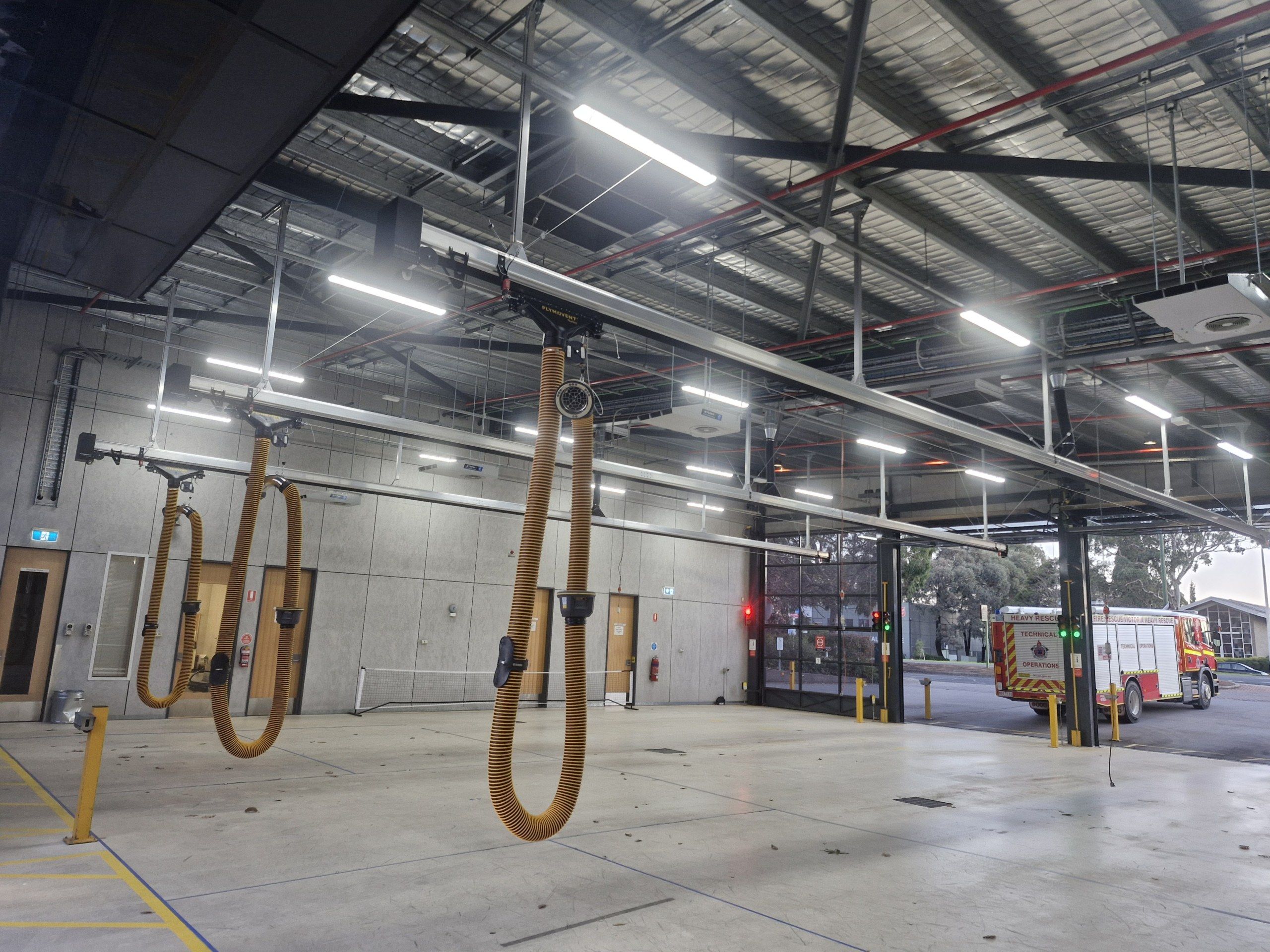
Vehicle exhaust extraction · Plymovent MRP and VSR
Diesel exhaust, captured at the tailpipe.
Design and construct specialists
From 1 December 2026 a workplace exposure limit for diesel particulate applies. Plymovent source capture for fire stations, workshops and depots, installed by the team behind Fire Rescue Victoria's station systems, in stations that never stopped responding and were left clean every day.
Scoped at your site, in one walk.
- Fire Rescue Victoria stations
- Plymovent, through Fantech
- Australia wide, and New Zealand
- Ten year workmanship warranty on systems we install and maintain
No cost, no obligation
We will measure your air for you, free.
We come out, install a Plymovent AeroGuard air monitoring device in your workshop and leave it running. You get a compliance report telling you where your building sits against the new limit. There is no charge for any of it, and no obligation to buy a system off the back of it.
Most workshops have never measured. Guessing is the expensive way to find out, either way.
The rules changed
Diesel exhaust rules change 1 December 2026.
Diesel engine exhaust is classified by IARC as a Group 1 carcinogen. From 1 December 2026 a mandatory workplace exposure limit for diesel particulate matter applies. Most workshops and depots have no idea where they sit against it, and source capture is the control that fixes it at the source.
29days until the limit applies
- mg/m³
- 0.01
- The limit for diesel particulate, measured as respirable elemental carbon.
- The date
- 1 Dec
- Workplace exposure standards become limits, with diesel particulate added to the list.
- National limit
- First
- Diesel particulate has not carried a national exposure limit before.
Read the change on the Safe Work Australia site.
Sources: IARC Monographs volume 105, diesel engine exhaust, Group 1, 2012. Safe Work Australia, workplace exposure limits for airborne contaminants, effective 1 December 2026. This page describes our understanding of the change and is not safety or legal advice. Check your obligations with your regulator or an occupational hygienist.
Source capture
Caught at the pipe, gone from the room.
General ventilation dilutes exhaust after it is already in the room. Source capture takes it at the tailpipe before anyone breathes it, which is where it sits in the hierarchy of control: fix it at the source before you dilute it or hand out masks.
At the tailpipe
A nozzle seals to the exhaust outlet, so the fumes never reach the room air.
Extracted and ducted out
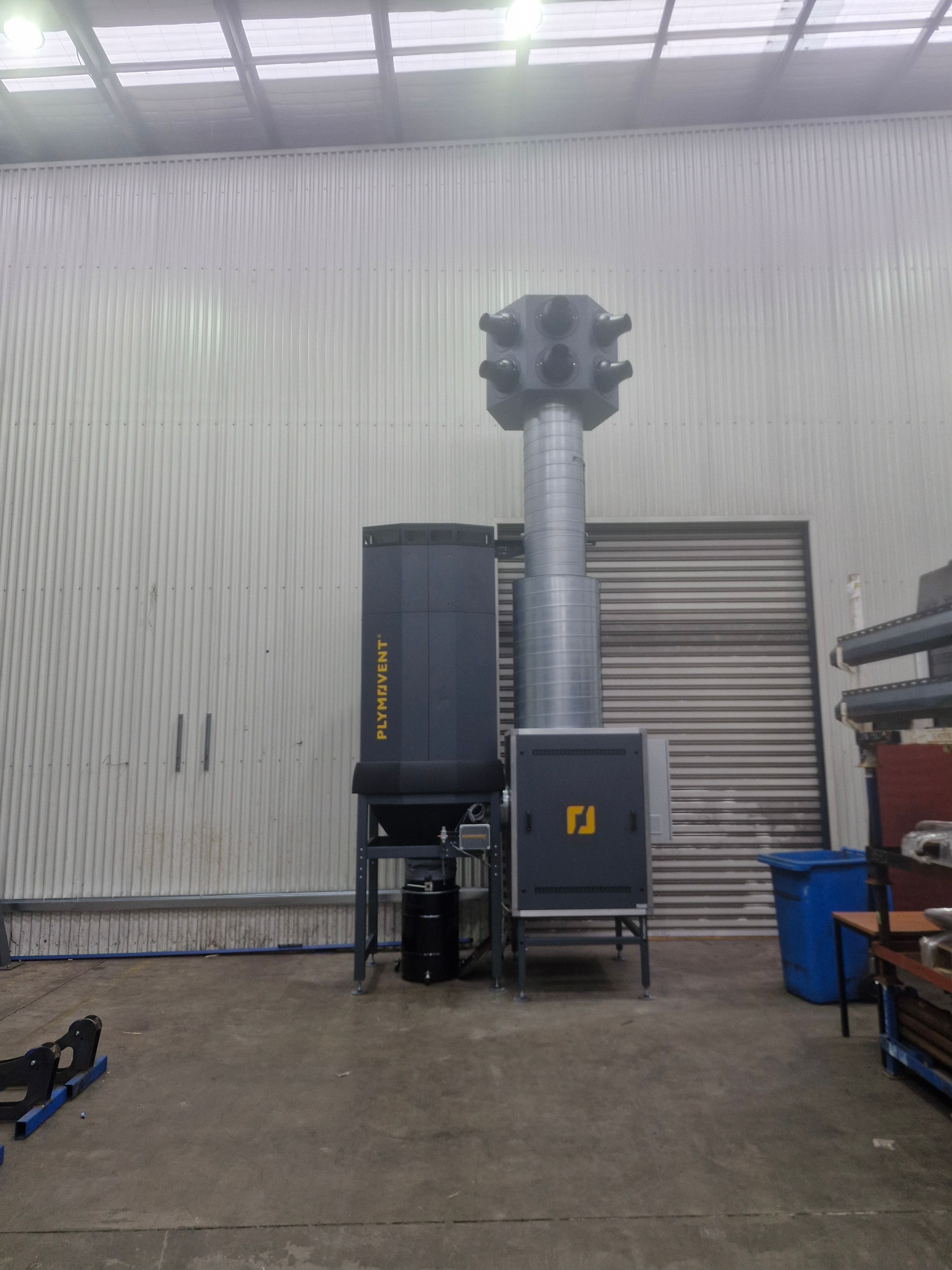
An extraction fan pulls the exhaust through overhead ducting and discharges it outside the building.
Releases on the move
In drive-through stations the hose tracks the vehicle and releases automatically at the door. Nobody gets out to unhook it.
Sized to your fleet
Fan capacity, duct runs and drops matched to the vehicles and movements on your site, then commissioned with the airflow measured.
Bays clear when the alarm goes
90 seconds
Fire Rescue Victoria
Proven in working fire stations.
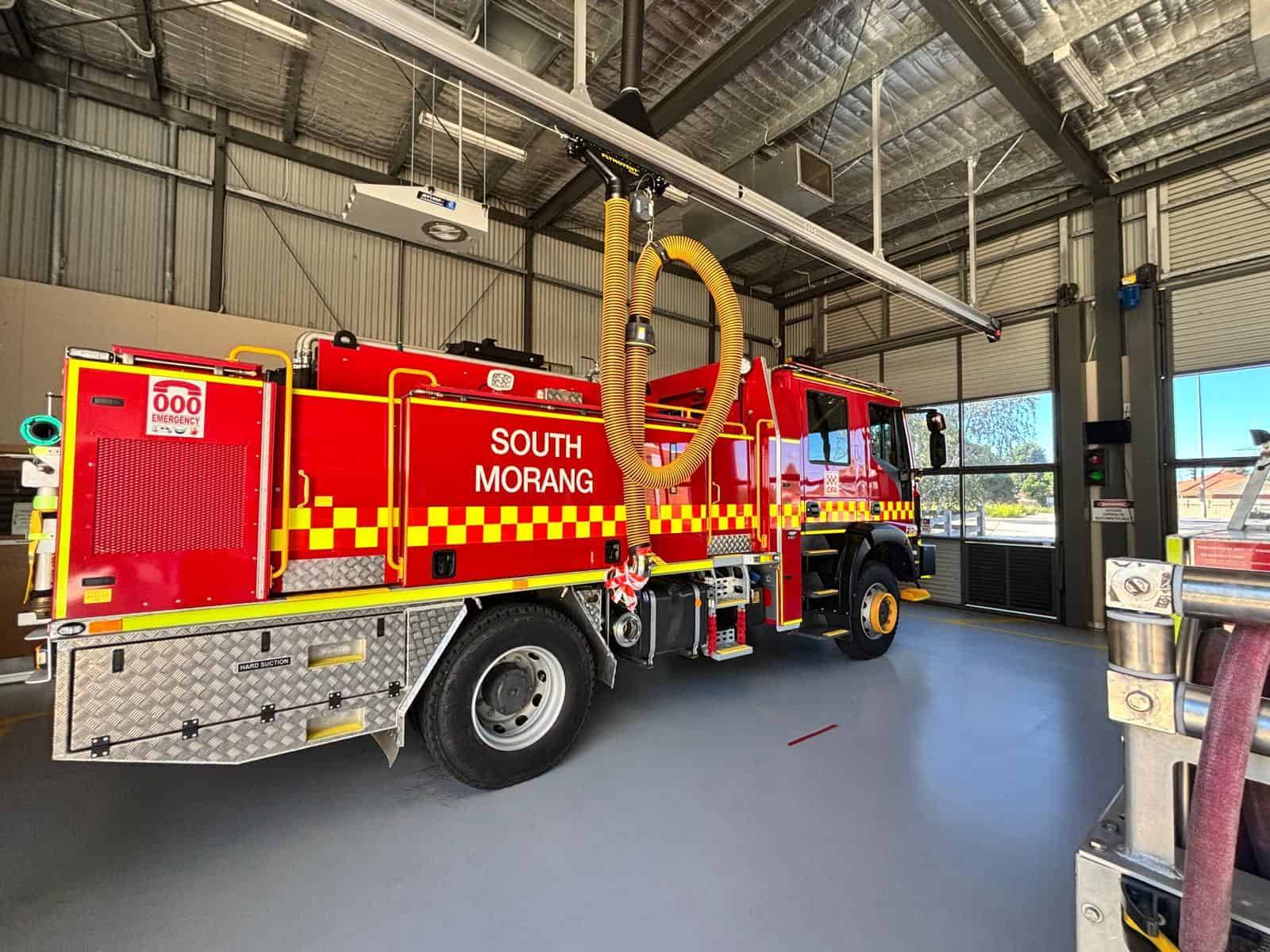
90 seconds. That is how fast a bay has to clear when the alarm goes. Which is the whole point of the number. A crew has seconds, not minutes, and nothing we install can be in the way of that.
So we build for the turnout, not for the installer. The rail, the drops and the release get set out so a truck leaves at full speed with nobody unhooking anything, and so the system is out of the way the moment it matters. We are live site experts: we do the install around a station that never closed, and we get out of the way when the alarm goes.
We are not the only Plymovent installer in Australia. We are the only installer of the MRP and VSR source capture system, which Plymovent designed and we re-engineered. On stations we build the rail, the drops and the release to suit how that station actually turns out.
The job to look at
South Morang, one building, two services.
Emergency services
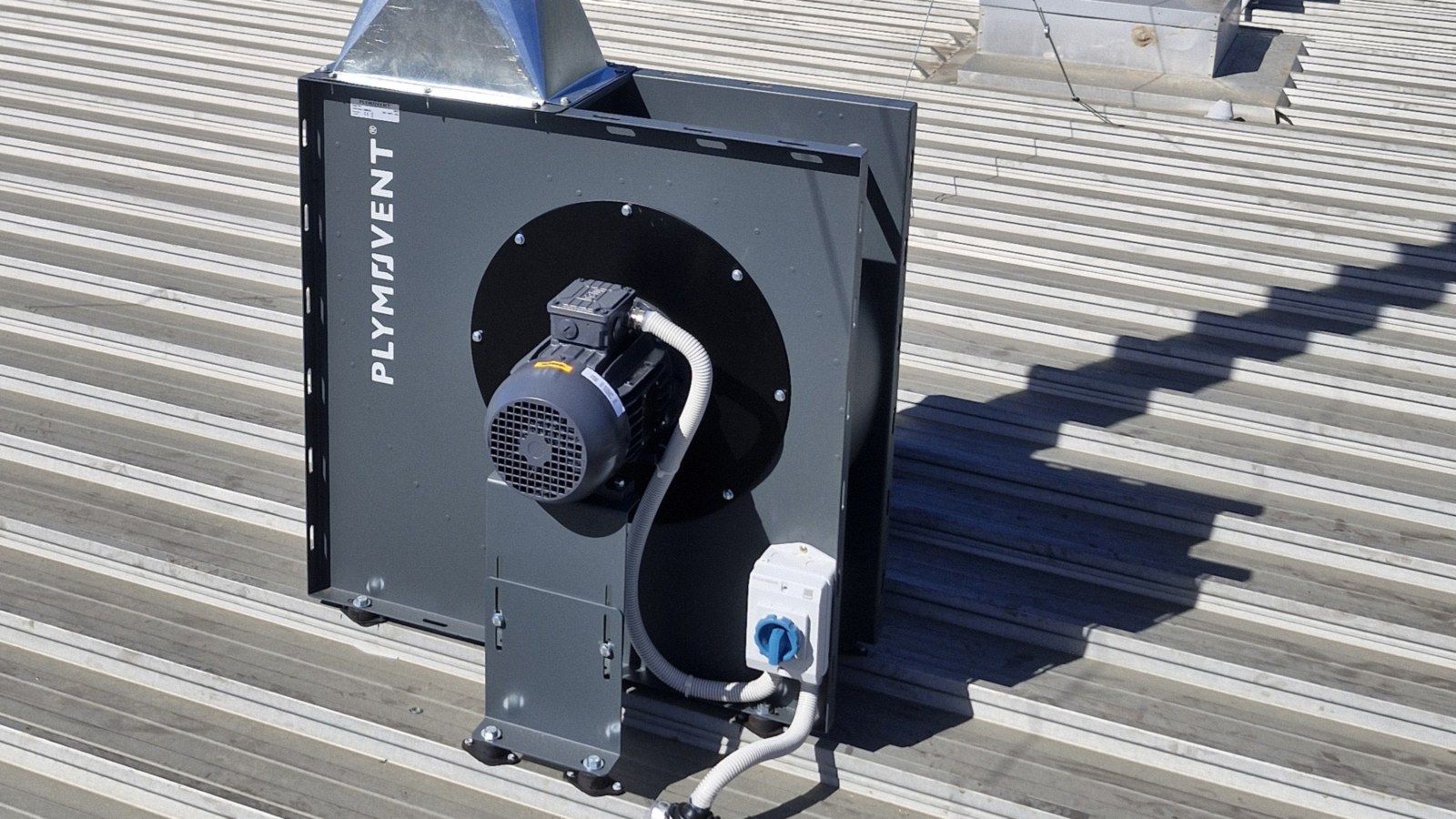
Combined FRV and CFA station, South Morang
A combined FRV and CFA station in South Morang, where turnout vehicles start indoors. We installed Plymovent rail-mounted source capture across three bays through Fantech, finishing in early 2025, and the station stayed running the whole time. Exhaust hoses connect at the tailpipe and release as the truck rolls out, and fans start automatically on turnout. Jet vents clear the bay when the rear doors open.
Who needs it
Any building where diesel runs indoors.
Fire and ambulance stations
Turnout vehicles start inside and the crew sleeps upstairs. The reason the category exists.
Bus and coach depots
Dozens of engines starting before dawn under one roof. Rail-mounted capture handles vehicles at scale.
Truck workshops and dealerships
Engines running on the hoist all day. Hose reels at each bay keep the workshop air clean.
Council and utility depots
Mixed fleets, plant sheds and wash bays. One system scoped across the lot.
Plant and equipment workshops
Excavators, gensets and ag machinery under a roof. If it burns diesel indoors, it counts towards the limit.
Everywhere else diesel runs inside
Forklift fleets, loading docks, test bays. If you are not sure the limit reaches you, the site assessment answers it.
The right fit
Who the limit reaches, who it doesn't.
This is for you
Fire and ambulance stations, bus and coach depots, truck workshops and council depots, anywhere in Australia and in New Zealand. Anywhere diesel engines start or run indoors, the site walk is worth your hour.
This is not for you
Sites where vehicles never run indoors. If that is you, the limit likely is not your problem, and the site walk will say so plainly rather than sell you ductwork you do not need.
If that is your building, book a site assessment.
Frequently asked
What sites ask us first.
What changed in the law on diesel exhaust?
From 1 December 2026, workplace exposure standards become workplace exposure limits, and diesel particulate matter is added to the list at 0.01 mg/m³ measured as respirable elemental carbon over eight hours. It has never carried a national limit before.
Does every vehicle need its own extraction point?
No. The site walk counts bays, vehicles and movements, and the system is scoped to those rather than to the fleet size.
What is Plymovent?
The source capture hardware. Fantech has held the exclusive Plymovent distributorship for Australia and New Zealand since August 2018, and our installs run through it.
We already have a system. Can you service it?
Yes. Bring it into a maintenance schedule and the reporting follows the same discipline as the mechanical side.
Where do you install?
Australia wide, and New Zealand. So far that has meant Victoria, Tasmania, South Australia and the ACT.